
Every professional trader I've read about or spoken to journals. Every retail trader who blew an account and came back to trading more disciplined started journaling. This is not a coincidence. The journal is the mechanism by which you convert raw experience — including losing experience — into genuine understanding of your own patterns. Without it, you're repeating a loop you can't see.
This article covers the physical journals I use and recommend, the digital alternative, and the pre-formatted trading journal notebooks that remove the blank-page problem for traders who aren't sure what to write. The physical vs. digital question is worth addressing directly: I use both. Physical for the morning trade plan and session notes — the act of writing by hand slows thinking down in a useful way. Digital (Notion) for trade log data, screenshots, and end-of-week review.
| Journal | Type | Best For | Price | Verdict |
|---|---|---|---|---|
| Leuchtturm1917 A5 Dotted | Blank/dotted notebook | Daily session notes, plans | £22.50 | ⭐ Best all-round |
| RHODIA 117402C Flexible Notebook | Blank/lined notebook | Clean writing, permanence | £12.49 | Best for writing quality |
| Moleskine Classic Expanded A5 | Ruled/dotted notebook | Familiar, widely available | £18.41 | Most accessible option |
| Forex Trading Log Book | Pre-formatted trading | Forex traders — structured format | £7.97 | Best pre-formatted option |
Leuchtturm1917 A5 Dotted — The Daily Driver
The Leuchtturm1917 is the default recommendation for serious note-takers across any discipline, and it earns that reputation in a trading context. The A5 dotted version is the format I use daily: small enough to sit beside the keyboard without crowding the desk, large enough to write a meaningful session plan without feeling cramped. The dot grid gives structure without the constraint of ruled lines — you can sketch a chart, write notes, and mark levels in the same spread.
The paper quality handles fountain pens without bleed-through (which matters if you care about the permanence of your notes), the pages are numbered, and the book includes an index at the front. For a trading journal, the numbered pages and index are genuinely useful — you can log trade dates in the index and find specific sessions weeks later without leafing through the entire book.
Available on Amazon UK in a range of colours. I use black exclusively, because I keep multiple years of journals and I want them to look identical on the shelf.
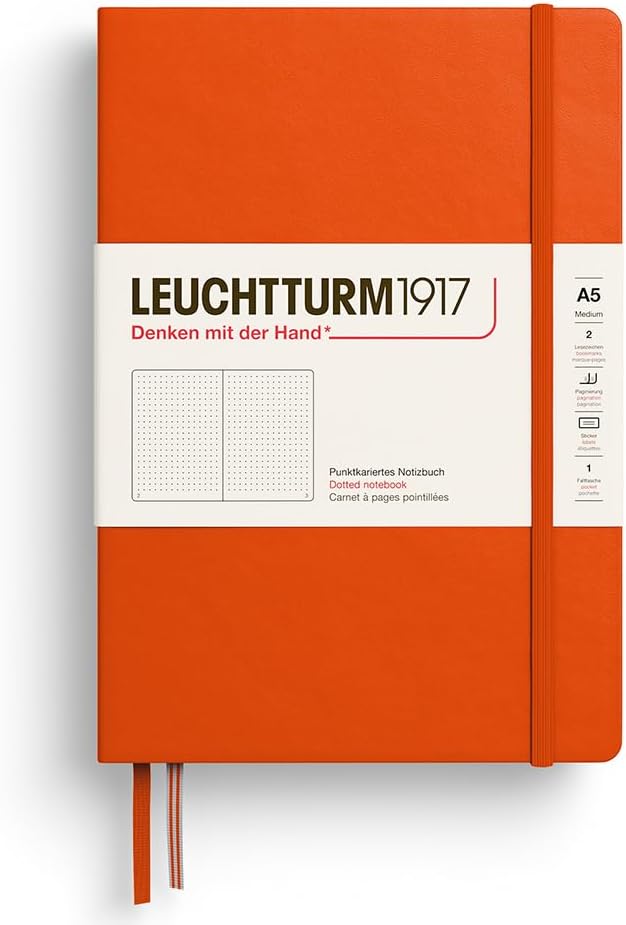
The benchmark everyday notebook. Numbered pages, front index, dot grid, good paper quality that handles most pens without bleed-through. Available in 20+ colours. Perfect format for daily session plans, trade notes, and pre-session preparation. The journal serious traders return to again and again.
Pros
- Numbered pages + front index
- Dot grid — flexible layout
- Good paper quality — minimal bleed
- 20+ colour options
- Elastic closure, ribbon bookmark
Cons
- Not fountain-pen paper grade
- Slightly stiffer binding than Moleskine
- Premium price vs. basic notebooks
Rhodia Webnotebook A5 — For the Writing Quality
If you care about the quality of the writing experience itself — the way ink sits on the page, the resistance of the paper to the nib — the Rhodia Webnotebook is superior to the Leuchtturm. Rhodia's paper (90gsm, slightly coated) is the reason stationery enthusiasts choose it: fountain pen inks dry cleanly, there's almost no showthrough, and the surface has a smooth, almost silky feel that makes extended writing sessions genuinely pleasant.
The tradeoff: no numbered pages, no index. Rhodia assumes you'll manage your own organisation. For trading journals where chronological session-by-session use is natural and you're not cross-referencing specific entries, this is rarely a problem. Available on Amazon UK; also widely stocked by specialist pen and stationery retailers.
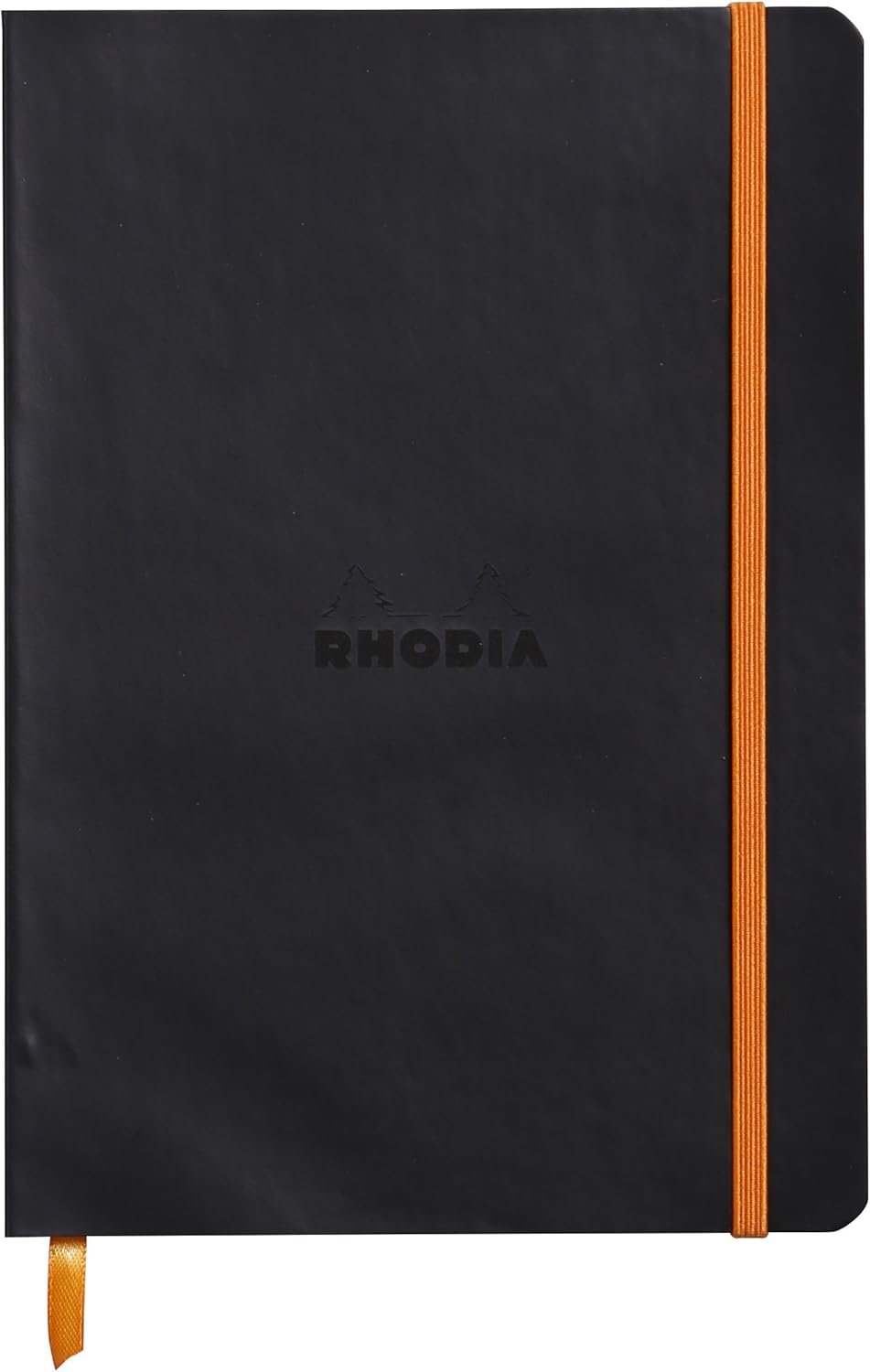
Superior writing experience to the Leuchtturm — 90gsm paper, excellent fountain pen compatibility, almost zero showthrough. Available in blank, ruled, and dot grid formats. Hardcover with elastic closure. The choice for traders who take the physical writing experience seriously and use a quality pen.
Pros
- Outstanding paper quality
- Fountain pen compatible
- Almost zero bleed or showthrough
- Multiple format options
- Hardcover, durable construction
Cons
- No numbered pages or index
- Fewer colour options
- Less widely available than Leuchtturm
"The journal is the mechanism by which you convert raw experience — including losing experience — into genuine understanding of your own patterns. Without it, you're repeating a loop you can't see."
Moleskine Classic A5 — The Accessible Option
Moleskine is the most recognisable notebook brand in the world, and the Classic A5 is their workhorse product. It isn't the best notebook available — the paper quality is average, the price is higher than it should be for what you get, and the legend that Hemingway used one is marketing. But it's widely available on Amazon UK and in most bookshops and stationery stores, it comes in ruled and dotted formats, and millions of traders and writers use it without complaint.
If you want to start journaling today and don't want to wait for delivery of a Leuchtturm, the Moleskine does the job. The soft cover version is noticeably more flexible, which some people prefer. The pocket at the back is genuinely useful for loose notes and trade screenshots printed and folded.
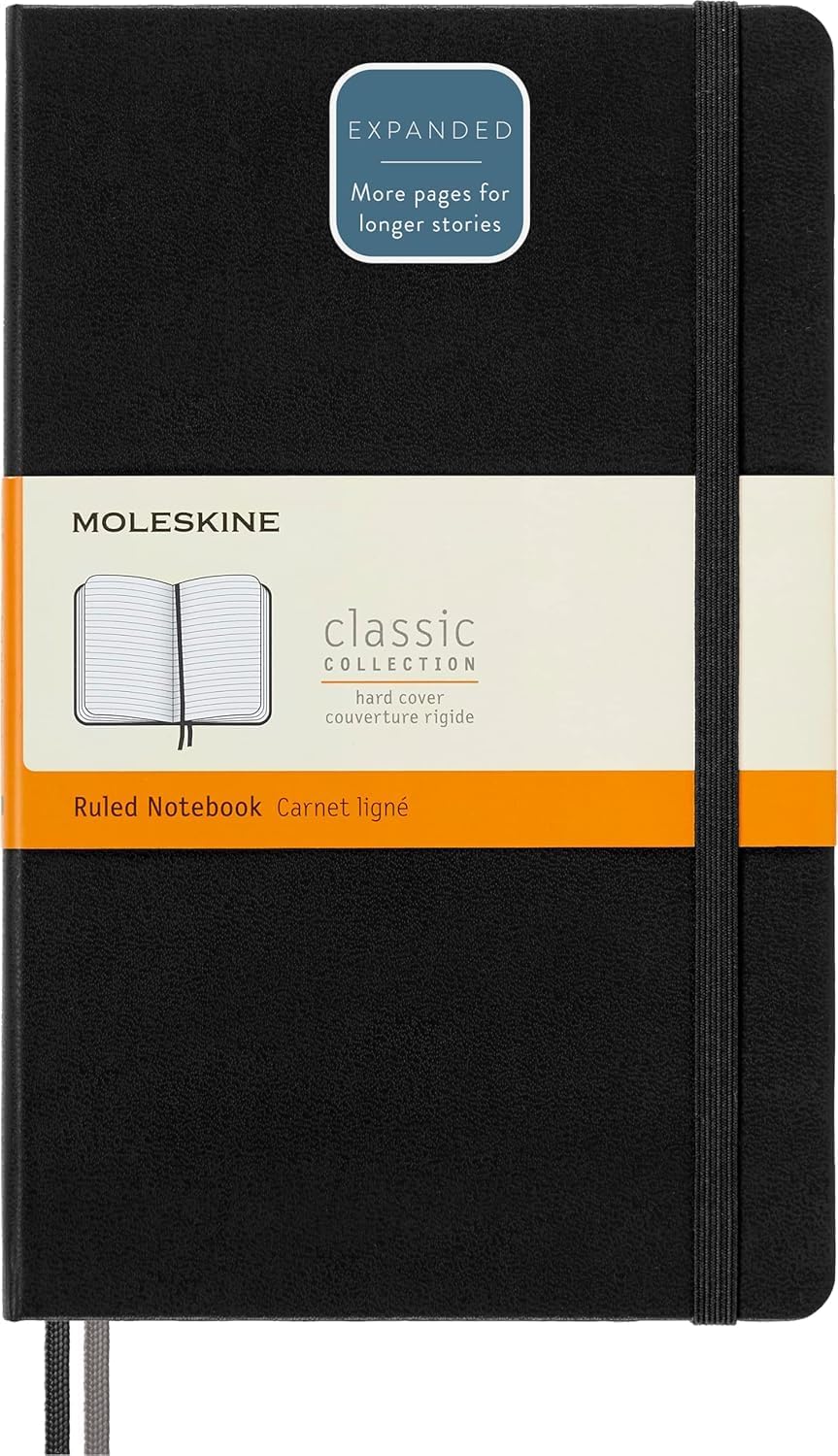
The world's most recognised notebook. Available everywhere, in ruled, dotted, and plain. Paper is average but adequate. Useful back pocket. Available same-day in most UK towns. The right choice if you want to start a trading journal today rather than waiting for something better to arrive.
Pros
- Available everywhere — immediate
- Recognisable, trusted format
- Useful back pocket
- Soft or hardcover options
- Ruled, dotted, and blank versions
Cons
- Paper quality below Leuchtturm/Rhodia
- Overpriced for what it is
- Ink can bleed with wet pens
Pre-Formatted Trading Journals — For Structure Without the Setup
The blank-page problem is real. If you've never kept a trading journal, sitting down with a blank Leuchtturm and trying to figure out what to write is its own obstacle. Pre-formatted trading journals solve this by providing a printed template for each trading session — entry/exit fields, market context, setup notes, emotional state, and post-trade review.
There are several on Amazon UK. The Trendabl Trading Journal and the Trading Performance Journal by various authors provide a consistent daily structure. The discipline they enforce is the point — if the page tells you what to fill in, you'll fill it in, even on days when you can't be bothered to construct your own format.
The tradeoff: they're less flexible than a blank journal. If your trading style requires noting specific things that the template doesn't anticipate, you're working around it rather than with it. They're also consumable — you'll fill one in a few months and need another. Use a pre-formatted journal to build the journaling habit, then transition to a blank journal with your own evolved template once you know what you need to capture.
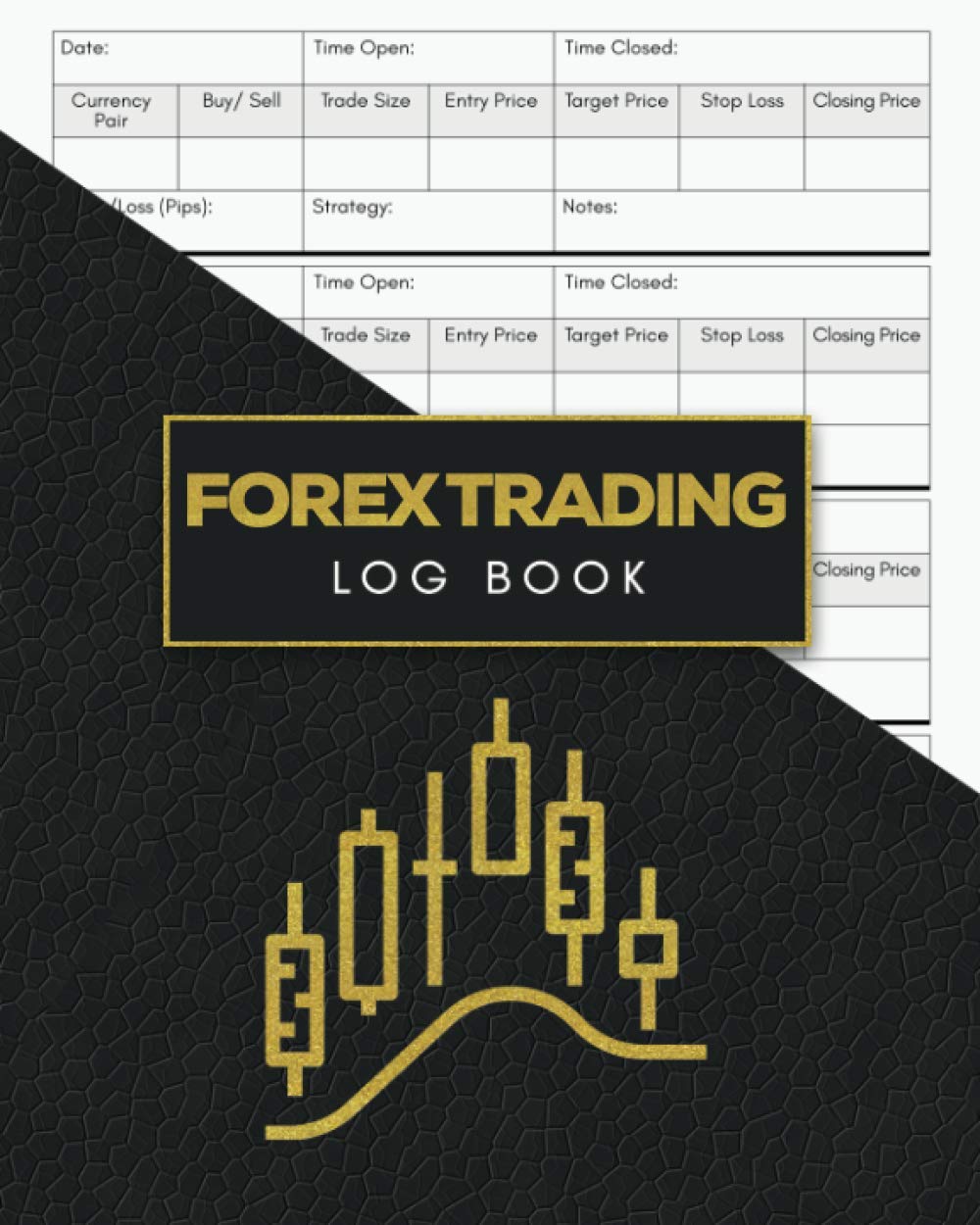
A purpose-built Forex trading log with pre-formatted pages for trade entries, watchlists, setup notes, and post-trade review. At under £8 it's the lowest barrier to building the journaling habit. Covers all the essentials: pair, direction, entry/exit, risk, result, and notes — structured so you don't have to think about what to write.
Pros
- Removes blank-page obstacle
- Enforces consistent structure
- Prompts emotional state tracking
- Good for building the habit
- No design decisions required
Cons
- Less flexible than blank journal
- Consumable — needs replacing
- Template may not suit your style
- Quality varies by publisher
What to Actually Write — A Minimal Template
The most common question is what to put in the journal. Here's the minimal template I use — it takes about 5 minutes before a session and 5 minutes after:
Pre-Session (5 minutes before the open)
- Date & Session: Date, which session (London/NY overlap, RTH, etc.)
- Overnight context: Key levels from overnight, gaps, any macro events today
- Bias: Bullish / bearish / neutral going into open — one sentence why
- Key levels: The 2–3 price levels I'm watching
- Today's focus: One thing I'm working on (patience, no revenge trading, etc.)
- Mental state: One word — sharp, tired, distracted, calm
Post-Session (within 30 minutes of closing)
- Trades taken: Entry, direction, size, exit, result — brief
- Did I follow the plan? Yes / No / Partially
- Best decision: One thing I did well
- Biggest error: One thing to correct
- Carry forward: One thing to focus on tomorrow
That's it. It doesn't need to be longer. The value is in the repetition over time — reading three months of journals back reveals patterns you cannot see in the moment. The mental state field is particularly revealing: most traders find a clear correlation between certain emotional states and trading errors that they were completely unaware of until they saw it in the data.
The Digital Layer — Notion for Trade Data
Physical journaling handles the qualitative layer — the thought process, the emotional state, the plan. Digital journaling handles the quantitative layer — the trade log, the statistics, the screenshots. I use Notion for both the trade log database (entry, exit, direction, size, P&L, setup type, session) and end-of-week review documents.
Notion is free for personal use. The database functionality allows you to filter trades by setup type, by session, by result — which surfaces patterns in your trading data that are invisible in a paper log. It's not a sophisticated trading journal software (there are paid platforms for that), but for home traders managing their own data, it's more than sufficient.
Final Verdict
The Leuchtturm1917 A5 Dotted is the daily driver — numbered pages, dot grid, good paper, available on Amazon. If you want better paper and care about the writing experience, the Rhodia Webnotebook is the choice. If you want to start today without waiting, the Moleskine is available everywhere.
The Forex Trading Log Book is the lowest-cost entry point — at under £8, it removes the blank-page problem and provides a ready-made structure. Once the habit is established, migrate to a blank journal with your own evolved template.
The journal you'll actually use beats the perfect journal you won't. Start simple. Improve the format as you learn what you need to capture. The discipline of doing it daily is the point — the notebook is just the tool.