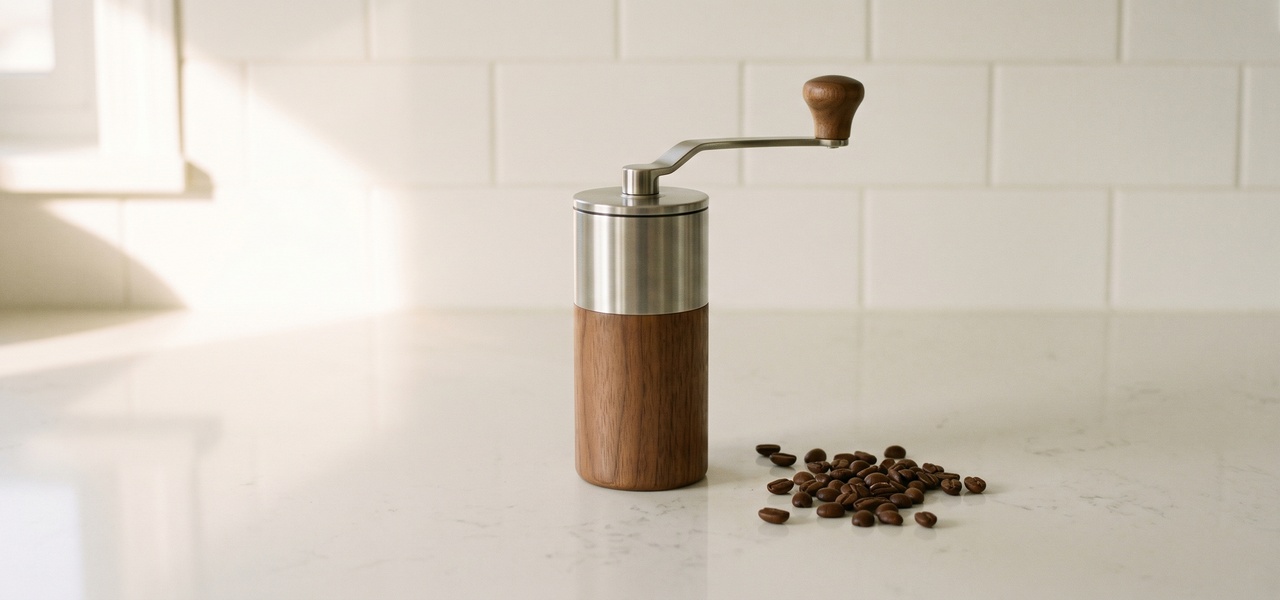
The case for manual grinding is simple: for the same money you'd spend on a mediocre electric grinder, you can buy a hand grinder with burrs and tolerances that genuinely outperform grinders costing two or three times as much. The tradeoff is time and effort — about 30–60 seconds of cranking for a single espresso dose, a minute or two for a pour-over. For most people, that's nothing. It's part of the ritual.
The UK market has matured quickly. 1Zpresso and Timemore have become the default recommendations for good reason — exceptional build quality, stainless or titanium burrs, precise stepless or stepped adjustment, and prices that feel almost irrationally good for what you get. The Germans have Comandante. The Japanese have Hario. All four brands have earned their places on this list.
| Grinder | Burr Size | Best For | Price (approx) | Verdict |
|---|---|---|---|---|
| 1Zpresso JX-Pro | 48mm SS burrs | Espresso & filter (all-rounder) | £199 | ⭐ Best all-rounder |
| Timemore Chestnut S3 | 48mm SS burrs | Filter-focused, traveller | £149 | Best filter grinder |
| Comandante C40 MK4 | 39mm Nitro Blade | Filter — absolute precision | £266.70 | Best-in-class filter |
| Timemore C2 | 38mm SS burrs | First grinder / everyday filter | £64.16 | Best entry-level |
1Zpresso JX-Pro — The Benchmark at This Price
Taiwanese brand 1Zpresso has done more for the manual grinder market than any other company in the past five years. The JX-Pro sits in the middle of their range and represents the point where the value proposition becomes impossible to argue with. Forty-eight millimetre stainless steel burrs, an external adjustment ring that clicks into position without requiring you to remove the handle, and a build quality that feels significantly more expensive than it is.
It grinds espresso. Properly. Fine enough for traditional espresso, fine enough for moka pot, adjustable widely enough for French press. That range is unusual for a manual grinder — most are filter-optimised and struggle at the fine end. The JX-Pro handles it comfortably. Grind time for an espresso dose (18g) is around 35–45 seconds at a reasonable pace. For a V60 dose (15g), about 60 seconds. On Amazon UK with Prime delivery.
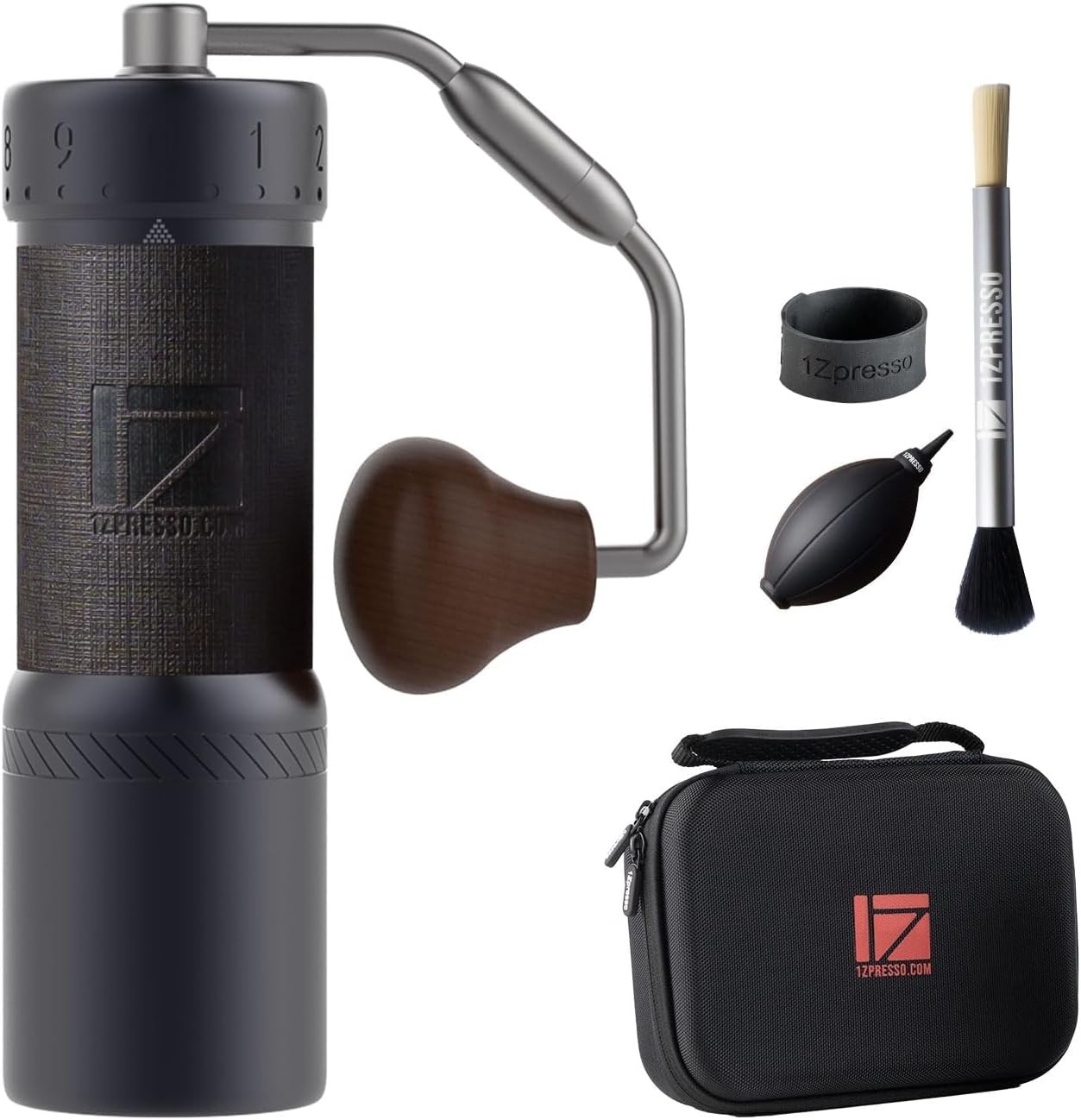
The benchmark manual grinder under £150. 48mm stainless steel burrs, external adjustment ring (no disassembly required), and a build that outperforms its price bracket. Handles espresso through to French press with excellent consistency. Our top pick for anyone serious about hand-ground coffee.
Pros
- Exceptional grind consistency
- External adjustment — very convenient
- True espresso-capable range
- Solid build, comfortable handle
- Low retention (minimal waste)
Cons
- Takes effort at espresso fineness
- No folding handle — bulkier to travel
- Numbered clicks (not always intuitive)
Timemore Chestnut S3 — The Thoughtful Alternative
Timemore's Chestnut series has gone through multiple iterations and the S3 is the current generation sweet spot. Forty-eight millimetre stainless burrs (same size as the JX-Pro, though a different geometry), a slim profile that slips into a bag, and a magnetic catch cup that holds in place without rattling. The S3 is filter-optimised — the burr geometry is tuned for the coarser end of the range, producing a cup with notable clarity and sweetness.
Where the JX-Pro will grind espresso comfortably, the S3 is less enthusiastic below the medium-fine range. If you exclusively brew filter (V60, Chemex, Aeropress, cafetière) then the S3's grind quality at those settings is superb. The travel-friendliness is a genuine plus — the folding handle reduces the packed size significantly. Available on Amazon UK.
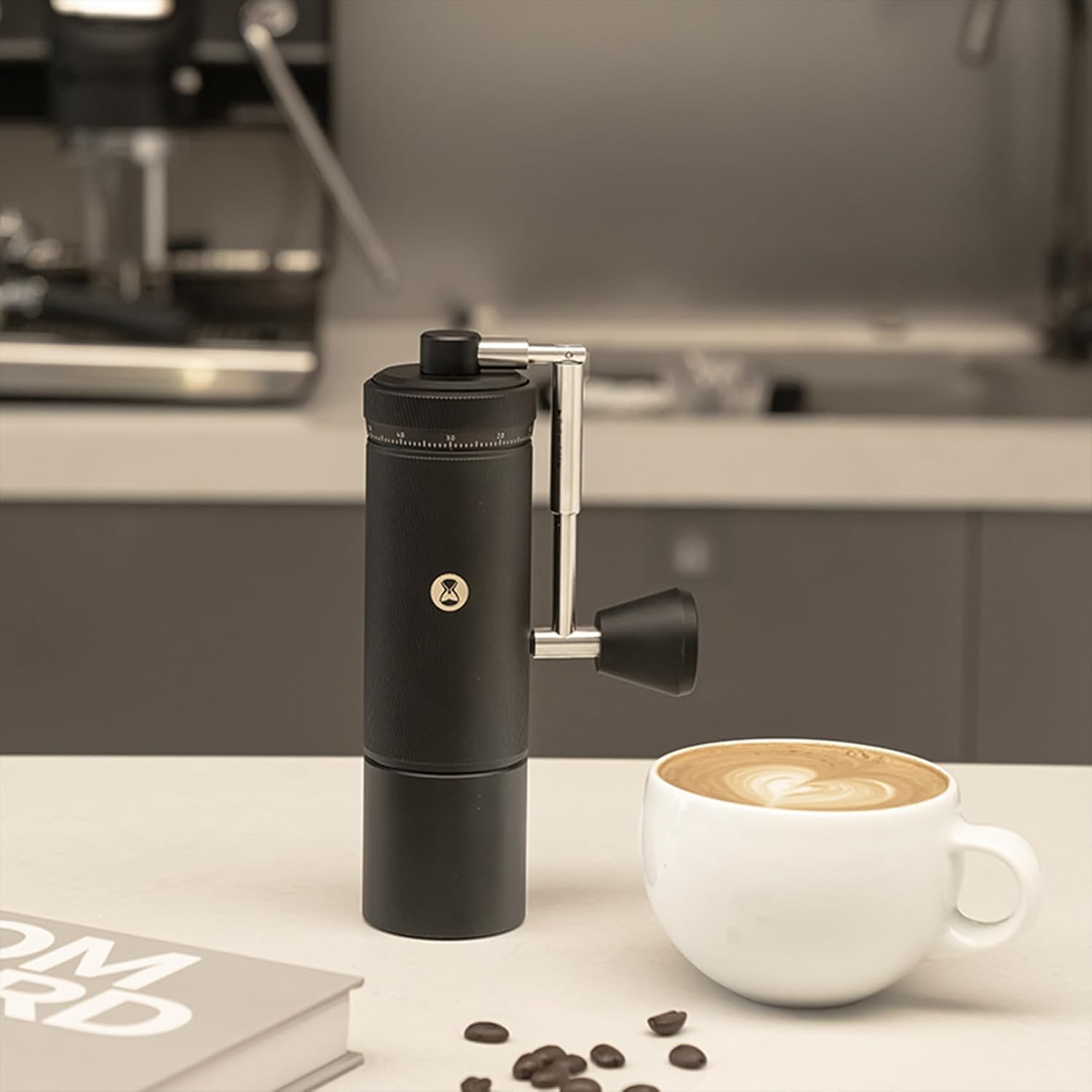
Filter-optimised manual grinder with 48mm stainless steel burrs, slim profile, and a magnetic catch cup. Produces outstanding cup clarity on V60, Aeropress, and Chemex. Folding handle makes it genuinely travel-friendly. The thoughtful alternative to the JX-Pro for filter-only households.
Pros
- Exceptional filter cup clarity
- Slim, travel-friendly profile
- Magnetic catch cup — no rattling
- Smooth, consistent grind action
- Strong build quality
Cons
- Not ideal for espresso
- Stepped adjustment (vs. stepless)
- Smaller catch cup capacity
"For the same money as a mediocre electric grinder, a hand grinder will produce results that outperform equipment costing twice as much. The only cost is about sixty seconds of your morning."
Comandante C40 MK4 — The German Standard
The Comandante C40 is the grinder serious filter drinkers aspire to. Made in Germany, machined to absurd tolerances, with proprietary Nitro Blade high-alloy steel burrs that Comandante have refined across four generations. The fourth-generation MK4 adds a redesigned lid system and improved burr alignment over the already-excellent MK3.
At £180–£220 it's the most expensive grinder on this list, and the value argument is harder to make. What you get for the money is a level of grind uniformity that is genuinely difficult to achieve at any price in manual grinding — very few fines, excellent particle distribution, and a consistency that translates into predictable, repeatable extractions. If you're using a Fellow Stagg kettle and a high-end pour-over setup, the Comandante is the appropriate grinder. Available on Amazon UK and through specialist retailers like Hasbean and Pact's own shop.
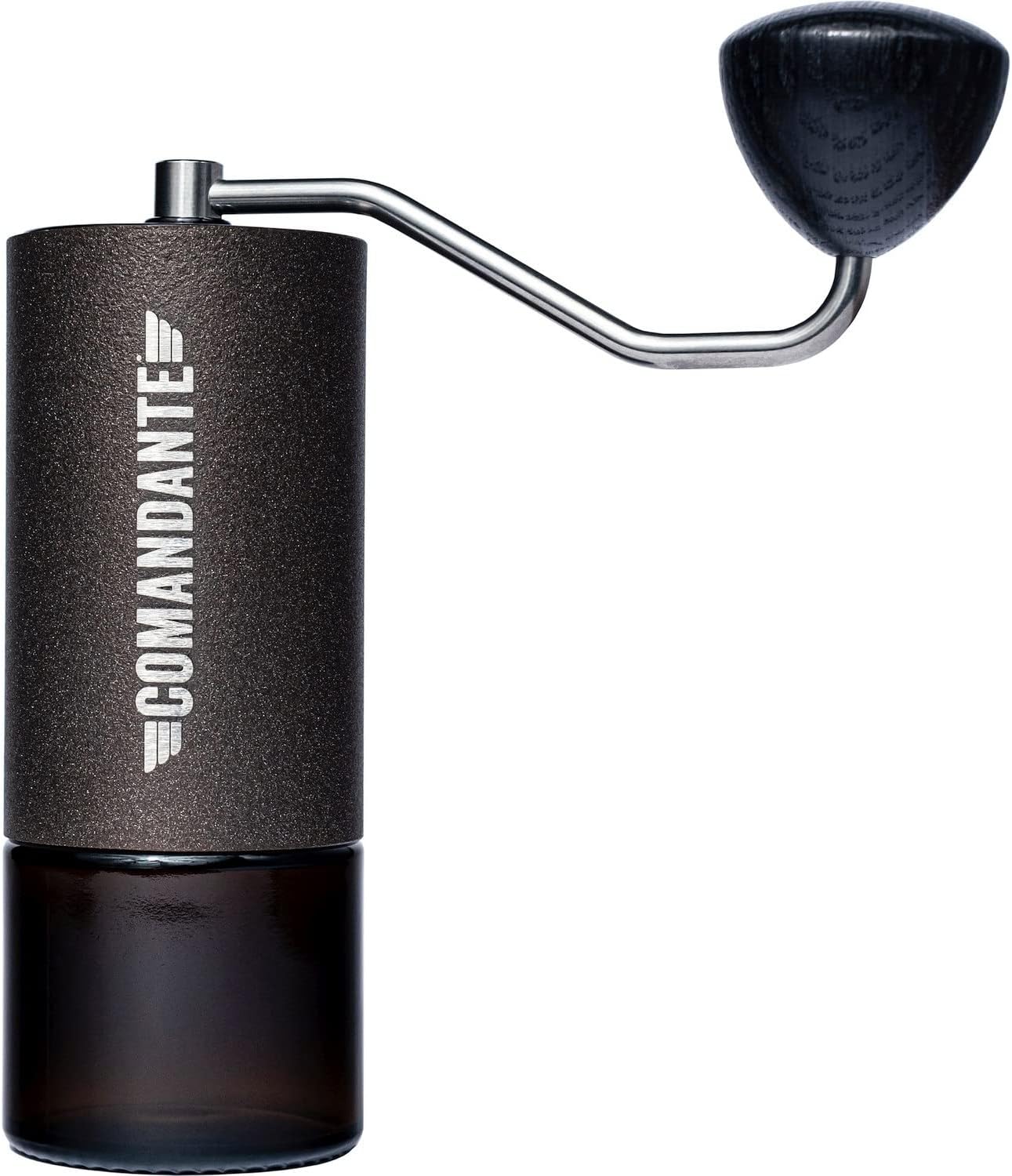
The German-engineered benchmark of manual filter grinding. Proprietary Nitro Blade high-alloy steel burrs, fourth-generation design with improved lid and alignment. Produces an exceptionally uniform grind with minimal fines — the last grinder a serious filter drinker will ever need. Available in multiple colourways.
Pros
- Best grind uniformity in class
- Minimal fines — cleaner cups
- German engineering, exceptional build
- Multiple colourways available
- 4th gen improvements over MK3
Cons
- Premium price — hard to justify vs JX-Pro
- Not designed for espresso
- Smaller burr size (39mm vs 48mm)
Timemore C2 — The First Grinder Worth Buying
If you're reading this and you've been using pre-ground coffee or a blade grinder, the C2 is where to start. At £45–£55 it removes every excuse. Thirty-eight millimetre stainless steel burrs, a sharp double-serrated cutting pattern, smooth bearing-supported action, and a dead-simple stepped adjustment system. For the money it is remarkable — significantly better than anything else in its price range, and better than some electric grinders at three times the cost.
It's filter-focused and best suited to medium-to-coarse grinds. Don't buy it for espresso — the adjustment range at the fine end is limited. Buy it for V60, Aeropress, cafetière, or moka pot. As a first serious grinder it makes an immediate, audible difference in cup quality. Amazon UK, often on promotion.
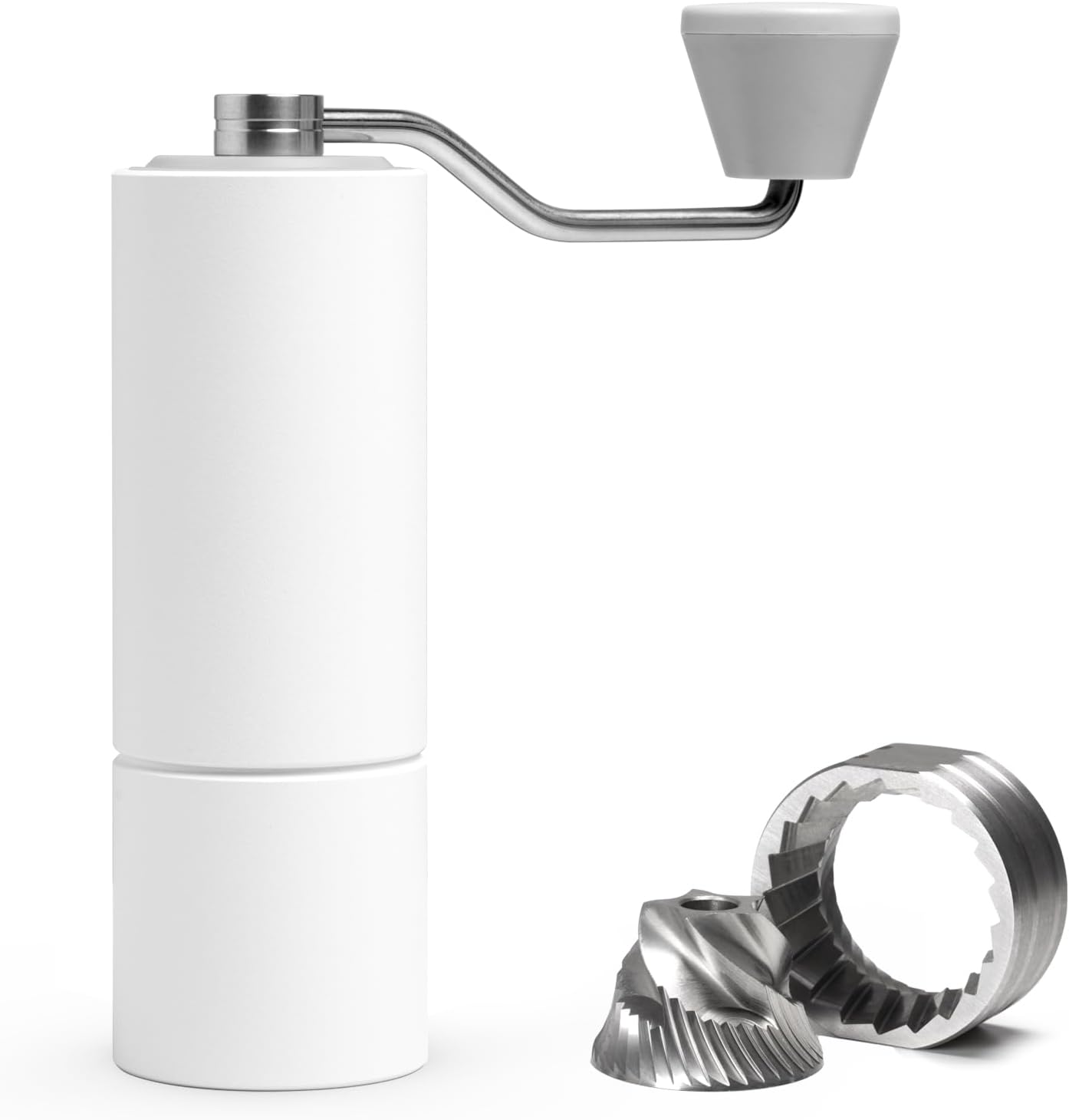
The definitive first grinder for anyone serious about improving their coffee. 38mm stainless steel burrs, bearing-supported action, and exceptional build quality for the price. Filter-optimised but versatile across Aeropress, V60, and moka pot. No other grinder at this price comes close.
Pros
- Exceptional value for money
- Smooth, quiet grinding action
- Solid stainless steel build
- Best performance under £60
- Consistent, predictable results
Cons
- Not suitable for espresso
- Basic catch cup design
- Inner adjustment (requires removal)
How to Choose
The decision matrix is simpler than most people make it:
- New to hand grinding / mostly filter: Timemore C2. If you use it for three months and want more, step up. If you don't, you've spent £50.
- Serious about filter, occasional espresso: 1Zpresso JX-Pro. The all-rounder that covers everything.
- Filter-only, want best possible cup quality under £110: Timemore Chestnut S3. The grind clarity on V60 is better than the JX-Pro at the filter range.
- Serious about filter, money less of an object: Comandante C40 MK4. The grinder you'll keep for a decade.
- Travel, camping, or just trying hand grinding: Timemore C2. Better burrs than the old Hario, lightweight, and widely available on Amazon UK.
One thing that doesn't factor into this list: speed. All manual grinders are slower than electric grinders. If grinding for 60 seconds sounds like too much effort, buy a decent electric burr grinder instead (the Baratza Encore is the entry recommendation there). Hand grinding is a deliberate choice — it rewards patience and pays back in cup quality that surprises even experienced coffee drinkers.
Final Verdict
The 1Zpresso JX-Pro is the recommendation if you want one answer. It covers espresso and filter, it's built to last, and the external adjustment ring makes daily use genuinely convenient. The Timemore C2 is the recommendation if you want the lowest risk entry point — it's that good for the price.
The Comandante C40 MK4 is for the committed filter drinker who wants the best available. At its price it has no real competition in the manual category — the grind quality is simply in a different bracket.